About
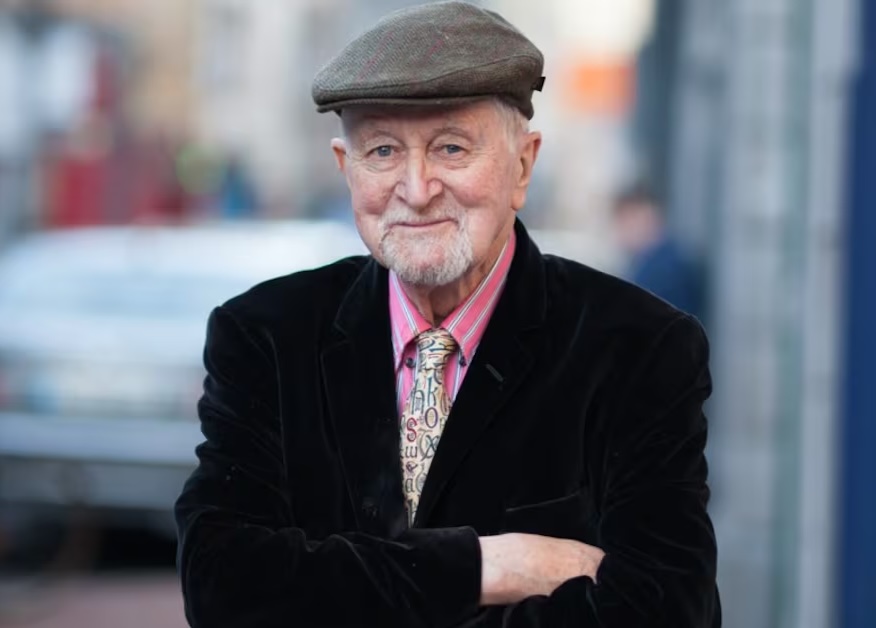
‘When writing extensively about issues both at home – including Irish nationalism and the ramifications of partition – and abroad, Desmond Fennell brought an originality of spirit and an informed independent analysis to bear on a wide range of topics. … His writings on the Irish revolutionary period, and their central contention that the Irish revolution had not achieved its aims of cultural and economic independence, remain influential to this day, and will endure. … Desmond embraced life in all its glory and its challenges. May his example of writing and thinking in the public discourse of the street come to flourish. His legacy and his curiosity, I have no doubt, will continue to inspire.’
President Michael D. Higgins
‘Desmond Fennell is one of the outstanding original thinkers of our time. Courage is perhaps his defining quality; he possesses a fine mind unadulterated by the whimsy of any particular day or any beguiling movement or politician.’
Eamon Dunphy
‘I respect Desmond Fennell’s moral courage in being a dissenting and often unpopular voice who has said much to try to make us reflect and debate as a people – something we are very bad at doing.’
Ruth Dudley Edwards
‘For Desmond Fennell an idea is an experience and an experience may fructify as an idea. His judgements are sometimes surprising – he was wrong about Heaney! – but always considered. They are written in a lucid prose which invites response and debate. For him autobiography in Ireland is necessarily also the autobiography of Ireland. He is that very rare thing – an intellectual who loves his country and takes it as a test-case of the entire modern world.’
Declan Kiberd
About Desmond Fennell
Desmond Fennell (1929–2021) was one of Ireland’s most important writers and public intellectuals. His rethinking of the nationalist approach to the Northern Ireland question in the 1970s and 80s laid the intellectual basis for future peace agreements. At the same time, he put forward radical ideas on regionalism and the decentralisation of political power that are still relevant today.
In addition, Desmond played a key role in the Gaeltacht Civil Rights Movement of the late 1960s and 1970s. His writing and thinking on the Irish language and the Gaeltacht continue to inspire thinking on minority languages today.
Throughout the 1980s, through his newspapers columns and books, Desmond often challenged the prevailing political consensus in Ireland and gained a reputation as an outspoken intellectual. He wrote insightfully about the role of public thinking in society and the need for a strong process for generating and discussing new ideas.
From the mid-1990s onwards, Desmond developed a radical new view of the Western world that he termed the postwestern condition. His prescient writing anticipated many of the major global events of recent years, including the economic collapse of 2008, the Brexit vote, Trump and the backlash against liberal values.
Desmond also produced a number of works of travel writing, from his early book Mainly in Wonder (1959) to Dreams of Oranges (1996).
Among his most important books are The State of the Nation (1983), Beyond Nationalism (1985), Nice People and Rednecks: Ireland in the 1980s (1986), Heresy: The Battle of Ideas in Modern Ireland (1993), Uncertain Dawn: Hiroshima and the Beginning of Postwestern Civilisation (1996) and Third Stroke Did It: The Staggered End of European Civilisation (2012).
From 1976 to 1982 Desmond lectured in Politics and Modern History at University College Galway, and subsequently taught English at the Dublin Institute of Technology. In 1990 the National University of Ireland awarded him a doctorate in literature for his published work.
The Radical Thinking of Desmond Fennell, a curated collection of his most important writings, edited by Toner Quinn and Jerry White, is now available to pre-order.
 Irish Writer Desmond Fennell